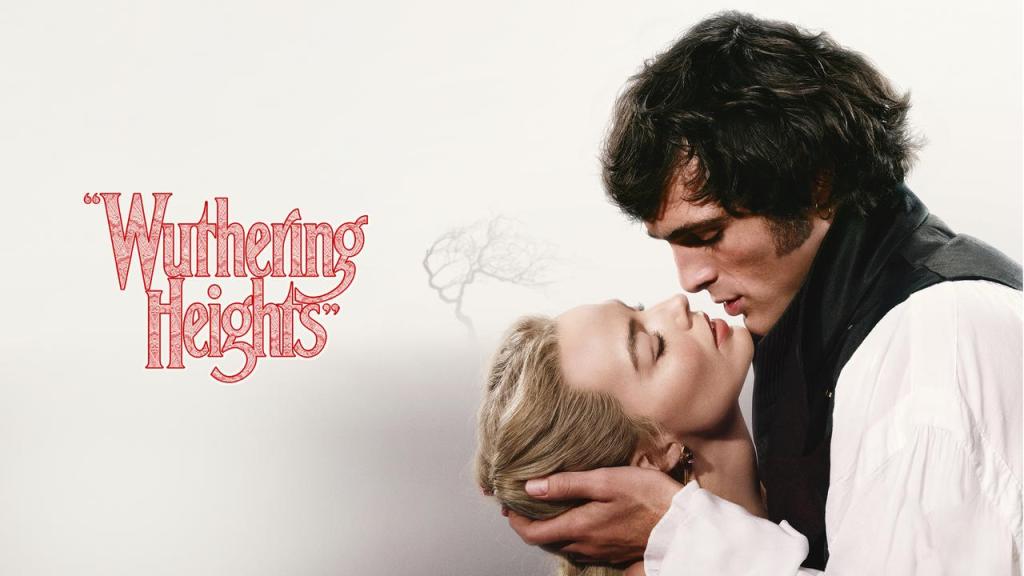
It’s a feral, agonising and aesthetic film. But it’s not Wuthering Heights.
I’m on my third read of Emily Brontë’s Wuthering Heights, having first read it when I was fourteen. I didn’t fall in love with the novel and its flawless complexities until I was seventeen, because at fourteen I didn’t fully understand the novel. Every word, sensory experience and description of the feral Moors was thoughtfully crafted to express the merciless world of the novel, something I couldn’t understand at fourteen. Emerald Fennell also said she read Wuthering Heights at fourteen, which perhaps explains the lacklustre casting choices, the removal of crucial characters and shifting of dynamics.
If Fennell wanted to make a yearning Yorkshire sex fest with Barbie and Nate Jacobs, she could’ve done: I would’ve been first in line at Cineworld with a Tango Ice Blast in hand. But she chose to attach the sacred Wuthering Heights name to it and half-arse an adaptation, quotation marks in clutch.
To be clear, I enjoyed the film, but only when I removed the expectation of it being Wuthering Heights from my mind. The cinematography was excellent. I particularly enjoyed the stark colour contrast between Catherine’s vibrant and intense clothing with the dark, rustic and haunting hues of a troubled Mr. Earnshaw and his decrepit house.
The unrelenting sounds of the roaring Yorkshire Moors was eerie, alongside the uncanny enclosure of Catherine’s skin room at the Linton’s. I was moved to tears at the intensity of Robbie and Elordi’s performances, not to mention those of Owen Cooper and Charlotte Mellington as young Heathcliff and Catherine. Obviously, Martin Clunes always triumphs.
In defence of Fennell, I don’t believe a 120 minute film could come close to doing the novel justice. It’s too complex, intricate, and every sentence is crucial: it needs to be a series.
I could perhaps forgive Fennell for omitting Lockwood to save time. I could possibly forgive her for sparing the second generation of characters to prioritise Catherine and Heathcliff’s relationship. Isabella is where I draw the line. For what possible reason does Isabella need to be Edgar’s ward, as opposed to his sister? An area I really can’t forgive is fetishising Isabella’s abuse as she’s chained up like a dog. I’m all for weird cinema, but this prevents Fennell’s Isabella from achieving what Brontë’s Isabella did, which is to become one of the strongest, most inspirational female characters in literature. Isabella has had enough of Heathcliff’s relentless abuse, and flees. Carrying their unborn child, she goes to London, a lone single mother in 18th century England, raising him the best she could until she eventually passes away.
Fennell cautiously makes sure to erase Catherine’s brother Hindley and the story of Heathcliff’s arrival, because that way she wouldn’t need to address the shocking casting choice. Heathcliff is a “dark skinned gipsy, in aspect,” and is taken from a port in Liverpool, implying foreignness and enslavement. A key reason for Heathcliff’s growing vengeful demeanour and status as a Byronic hero is the racial and xenophobic abuse he endures, particularly at the hands of Hindley. I’m not entirely sure how Fennell believes she has sufficiently justified her casting of Elordi by saying that is how she imagined him when she was fourteen. Did she not read the book? Did she also skim over the part where Catherine is described as having dark hair, being beautiful but certainly ragged?
The omitting of my favourite scene in the novel, the ‘Final Meeting’ of Catherine and Heathcliff in chapter fifteen, left a sour taste in my mouth. If Fennell wanted ferality and wild destruction, it has always been written on the page for her to take. In this scene, Catherine begs Heathcliff for forgiveness and he utters the famous line, “I love my murderer – but your’s? How can I?” meaning that whilst he can forgive Catherine for hurting him, he can’t forgive her for hurting herself. They’re both enveloped in an atmosphere of juxtapositions: hate and love, anger and relief, violence and tenderness. They get violent: Catherine pulls out a lock of Heathcliff’s hair on her deathbed.
Heathcliff begs Catherine to haunt him, to torment him from beyond the grave so they will never have to be apart. It’s the most intense, beautiful, emotive piece of literature I’ve ever read, and to see its name placed on this film is disappointing. “Wuthering Heights 2”? I’m not sure I’ll be the first one in the cinema if it gets that far.
 Diary of a Happy Goth
Leave a comment